
Forschungsvorhaben Längsverbindungen
Längsverbindungen hölzerner Masten und Verdrängungspfähle FÖRDERKENNZEICHEN: 2220HV002X
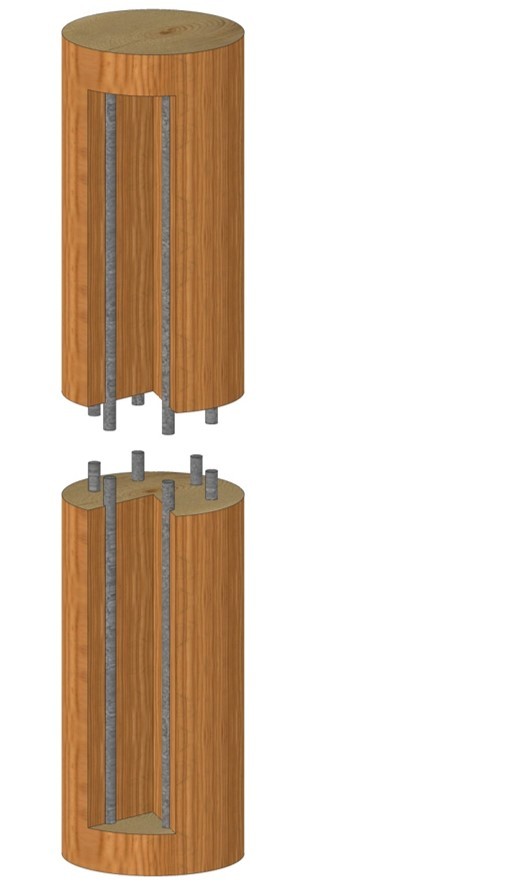
Übergeordnetes Ziel dieses Vorhabens ist es, bisher ungenutztes Potential von regional vorhandenen dauerhaften Holzqualitäten nutzbar zu machen. Daher soll eine kraftschlüssige, dauerhafte und leicht handhabbare Längsverbindung für hölzerne Pfähle im Wasserbau entwickelt und konstruiert werden, die es ermöglicht, einzelne Pfahlabschnitte zu einem voll tragfähigen Pfahl beliebiger Länge zu fügen. Durch das Fügen einzelner Pfahlabschnitte
- kann anfallendes Altholz (Wasserbauholz) einer neuen Verwendung zugeführt werden, indem noch intakte Pfahlabschnitte aufbereitet und zu neuen Pfählen ausreichender Länge gefügt werden können.
- müssen geschädigte Pfähle nicht vollständig, sondern nur in Teilbereichen erneuert werden, so dass intakte Bereiche verbleiben und weiter genutzt werden können.
- kann der Einsatz heimischer Hölzer wieder konkurrenzfähig werden, da dauerhafte Kernholzabschnitte zu Holzpfählen mit hohen und nahezu konstanten Dauerhaftigkeiten und Tragfähigkeiten über eine theoretisch beliebige Länge gefügt werden können.
In dem Vorhaben werden geeignete Längsverbindungen in umfangreichen klimatischen, statischen und dynamischen Versuchsreihen validiert und evaluiert. Unter realistischen Arbeitsbedingungen ausgeführte Vor-Ort-Versuche sollen die praxistaugliche Eignung unter diversen realen Randbedingungen nachweisen. Begleitend erfolgen die Implementierung eines Belastungsmodells sowie eines Finite-Elemente-Modells zur Bemessung sowie die Entwicklung von Praxisempfehlungen für potentielle Nutzer. Für den Einsatz von Altholz ist zudem die Entwicklung eines Verfahrens zur Selektierung von rückgebautem Wasserbauholz im Hinblick auf die Wiederverwendbarkeit vorgesehen. Ein besonderer Fokus muss dabei auf die Rammbarkeit der gefügten Pfähle gelegt werden, da Pfähle im Wasserbau als sogenannte Verdrängungspfähle üblicherweise durch Schlag- oder Vibrationsrammungen installiert werden.